
Flutter 跨端真实光照阴影引擎:消除 Elevation 在 iOS/Android 的光影撕裂
·
Flutter 跨端真实光照阴影引擎:消除 Elevation 在 iOS/Android 的光影撕裂
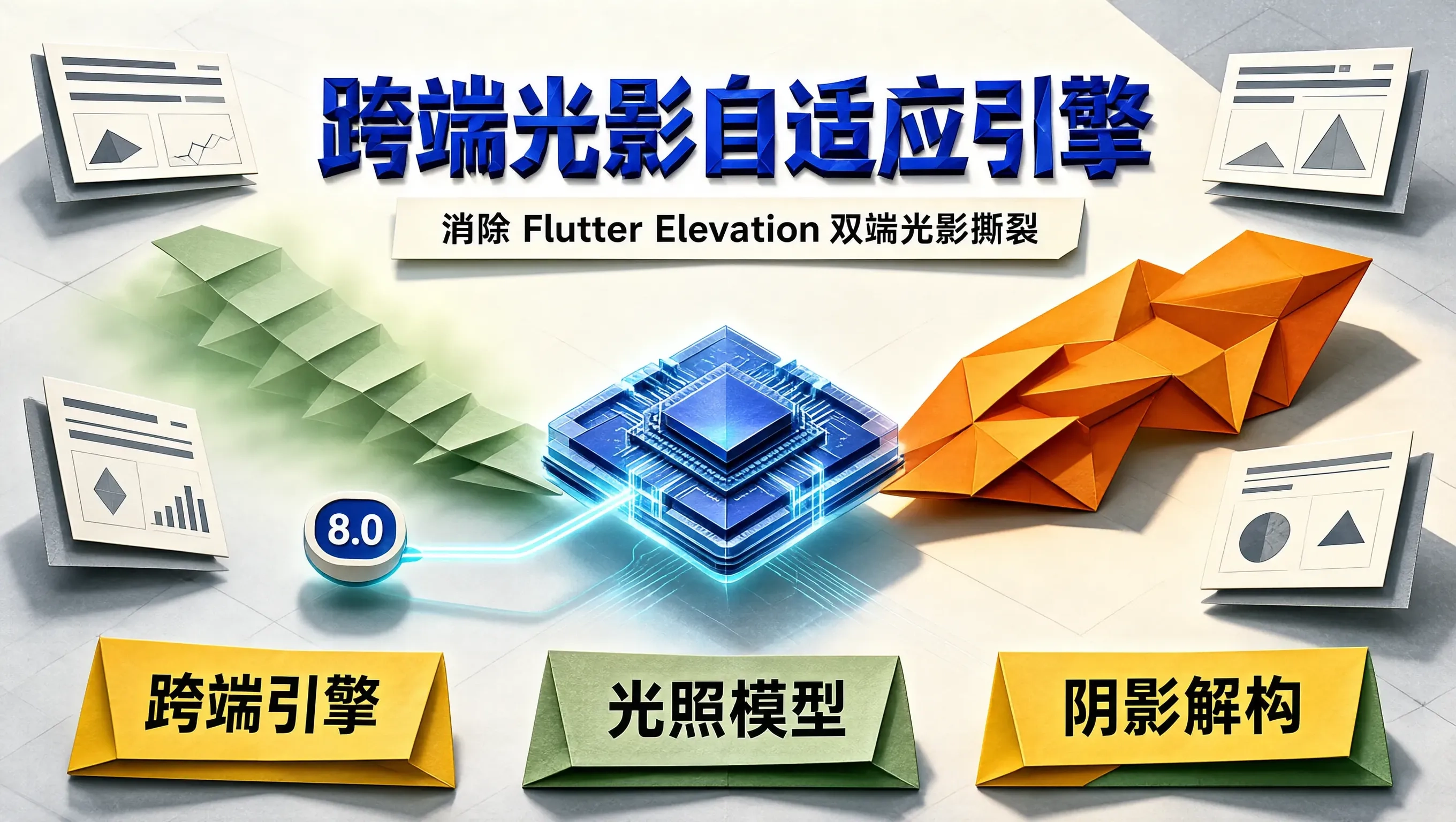
在 Flutter 跨端移动应用开发中,追求“双端原生设计质感(Native Design Fidelity)”的架构师和设计师经常会遇到一个极其棘手的视觉冲突——“阴影与海拔高度(Elevation)的光影割裂”:
- Flutter 官方的 Material Design 组件库大量使用
elevation: 4.0属性; - 在 Android 平台上:Elevation 遵循物理点光源投射,呈现出带有明显向下垂直位移的坚硬关键投影(Key Shadow);
- 但在 iOS 平台上:苹果的 Human Interface Guidelines(HIG)推崇的是柔和、大扩散、几乎没有硬边缘的环境弥散光(Ambient Soft Diffused Shadow);
- 如果直接在 iOS 页面上照搬 Material 的硬朗 Elevation 阴影,整套界面会瞬间散发出一种粗糙、生硬、与 iOS 优雅毛玻璃完全脱节的“浓重山寨感”!
构建一个跨平台物理自适应的真实光照阴影引擎(Adaptive Photometric Shadow Engine),能够在运行时依据操作系统原生光照模型,自动将单一的抽象层级参数(Elevation)映射为符合 iOS 或 Android 审美哲学的原生阴影,是跨端工程消除光影割裂的核心钥匙。
iOS vs Android 原生光照哲学与阴影模型差异
[抽象层级输入: Elevation = 8.0]
              │
    ┌─────────┴─────────────────────────┐
    ▼                                   ▼
[Android 原生光照: 双光源投影模型]       [iOS 原生光照: 柔和环境漫反射模型]
- 环境光 (Ambient Light): 0 偏移/微弱    - 采用单层或多层高斯超大模糊 (Blur 24px)
- 关键点光源 (Key Light): 纵向大位移     - 极低透明度 (Alpha 0.06 ~ 0.08)
- 边缘硬朗、立体感强烈                   - 边缘宛如轻雾包裹、纯净通透、呼吸感强
编写自适应真实光照阴影引擎(Dart)
我们手写一套跨端光影转换器,支持根据平台类型自动动态解构并合成多层 BoxShadow:
// photometric_shadow_engine.dart
import 'dart:io';
import 'package:flutter/foundation.dart';
import 'package:flutter/material.dart';

enum ShadowDesignPlatform { ios, android, web }

class PhotometricShadowEngine {
  // 核心:将单一 elevation 浮点数解构为符合目标平台哲学的多层 BoxShadow 列表
  static List<BoxShadow> buildAdaptiveShadow({
    required double elevation,
    Color shadowColor = const Color(0xFF0F172A),
    ShadowDesignPlatform? forcePlatform,
  }) {
    final platform = forcePlatform ?? _detectCurrentPlatform();

    if (elevation <= 0) return const [];

    switch (platform) {
      case ShadowDesignPlatform.ios:
        // iOS 哲学:大模糊半径、柔和多层空气弥散
        return [
          BoxShadow(
            color: shadowColor.withOpacity(0.04),
            offset: Offset(0, elevation * 0.5),
            blurRadius: elevation * 2.0,
            spreadRadius: -2.0,
          ),
          BoxShadow(
            color: shadowColor.withOpacity(0.06),
            offset: Offset(0, elevation * 1.2),
            blurRadius: elevation * 3.5,
            spreadRadius: -4.0,
          ),
        ];

      case ShadowDesignPlatform.android:
      default:
        // Android Material 3 哲学:环境光 (Ambient) + 关键点光源 (Key Light) 双光源
        final ambientAlpha = (elevation * 0.015 + 0.05).clamp(0.0, 0.25);
        final keyAlpha = (elevation * 0.02 + 0.08).clamp(0.0, 0.35);

        return [
          // 1. 环境光 (零偏移,全向扩散)
          BoxShadow(
            color: shadowColor.withOpacity(ambientAlpha),
            offset: Offset.zero,
            blurRadius: elevation * 1.5,
          ),
          // 2. 关键点光源 (向下垂直投射)
          BoxShadow(
            color: shadowColor.withOpacity(keyAlpha),
            offset: Offset(0, elevation * 0.9),
            blurRadius: elevation * 1.2,
          ),
        ];
    }
  }

  static ShadowDesignPlatform _detectCurrentPlatform() {
    if (kIsWeb) return ShadowDesignPlatform.web;
    if (Platform.isIOS || Platform.isMacOS) return ShadowDesignPlatform.ios;
    return ShadowDesignPlatform.android;
  }
}
封装为可无缝消费的 AdaptiveElevationSurface Widget
// adaptive_elevation_surface.dart
import 'package:flutter/material.dart';
import 'photometric_shadow_engine.dart';

class AdaptiveElevationSurface extends StatelessWidget {
  final double elevation;
  final Widget child;
  final BorderRadiusGeometry? borderRadius;
  final Color backgroundColor;
  final EdgeInsetsGeometry? padding;

  const AdaptiveElevationSurface({
    Key? key,
    this.elevation = 4.0,
    required this.child,
    this.borderRadius,
    this.backgroundColor = const Color(0xFF1E293B),
    this.padding,
  }) : super(key: key);

  @override
  Widget build(BuildContext context) {
    final effectiveRadius = borderRadius ?? BorderRadius.circular(20.0);
    final shadows = PhotometricShadowEngine.buildAdaptiveShadow(elevation: elevation);

    return Container(
      padding: padding ?? const EdgeInsets.all(20.0),
      decoration: BoxDecoration(
        color: backgroundColor,
        borderRadius: effectiveRadius,
        boxShadow: shadows,
      ),
      child: child,
    );
  }
}
业务实战:跨端自适应卡片展示
// showcase_screen.dart
class AdaptiveShowcaseScreen extends StatelessWidget {
  const AdaptiveShowcaseScreen({Key? key}) : super(key: key);

  @override
  Widget build(BuildContext context) {
    return Scaffold(
      backgroundColor: const Color(0xFF090D16),
      body: Center(
        child: AdaptiveElevationSurface(
          elevation: 12.0, // 声明 12.0 海拔深度
          backgroundColor: const Color(0xFF131B2E),
          borderRadius: BorderRadius.circular(24.0),
          child: Column(
            mainAxisSize: MainAxisSize.min,
            crossAxisAlignment: CrossAxisAlignment.start,
            children: const [
              Text(
                '自适应光影卡片',
                style: TextStyle(fontSize: 18, fontWeight: FontWeight.bold, color: Colors.white),
              ),
              SizedBox(height: 8),
              Text(
                '在 iOS 上呈现优雅弥散空气感,在 Android 上呈现刚劲立体投射感。',
                style: TextStyle(fontSize: 13, color: Color(0xFF94A3B8)),
              ),
            ],
          ),
        ),
      ),
    );
  }
}
总结
真正的跨端一致性,不是死板地在所有屏幕上强行画出一模一样的机械像素,而是尊重每一个操作系统的原生设计哲学与光影认知习惯。通过构建物理自适应的真实光照阴影引擎,将单一抽象的海拔高度参数无缝转化为符合 iOS 与 Android 审美的双光源或弥散光模型,你的 Flutter 应用才能彻底告别光影撕裂,在任何终端平台上都散发出原生顶级应用般的从容与高级感。

一站式 AI 云服务平台
更多推荐

 0
0 0
0- 0


 已为社区贡献54条内容

所有评论(0)